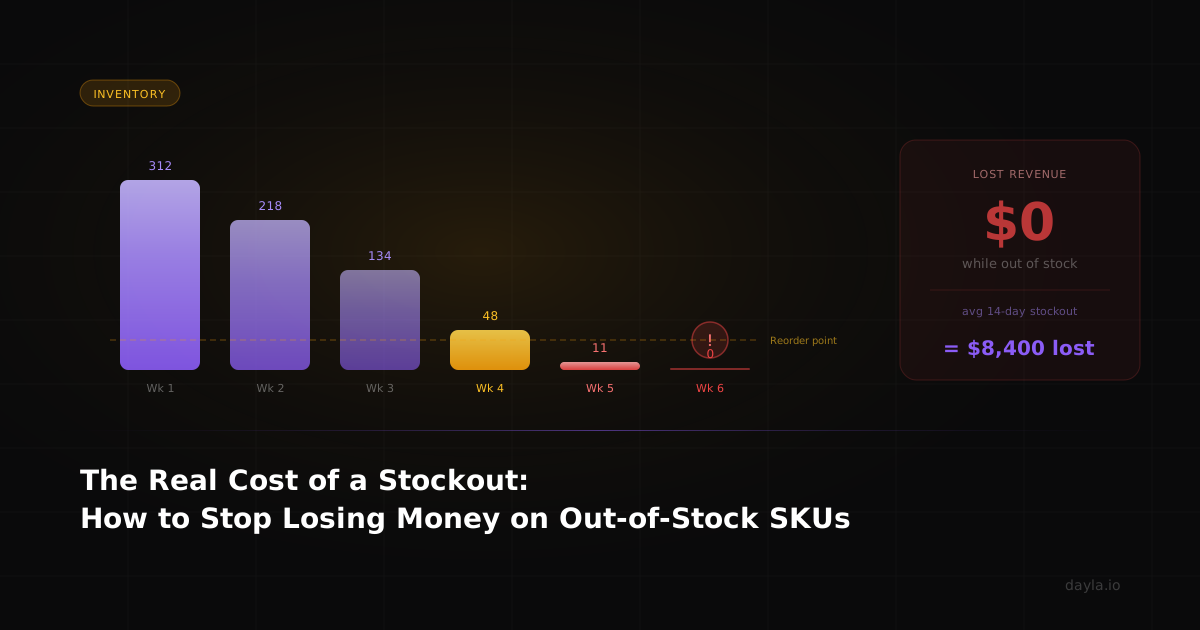
Why stockouts cost more than the lost sale
When a product goes out of stock, the obvious cost is the sale you didn't make. But the real cost is compounded: you're still paying for the ads driving traffic to a page that converts at 0%. Every dollar of ad spend during a stockout period is wasted.
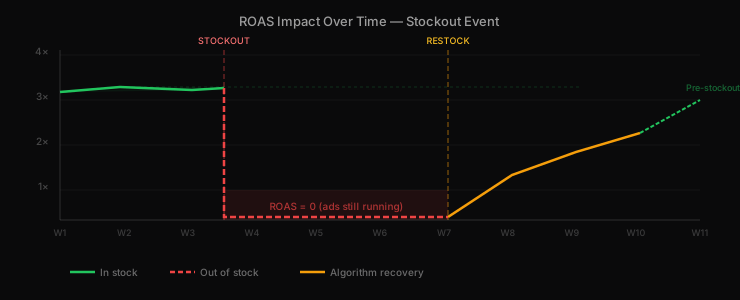
For a brand spending $500/day on ads for a specific SKU, a 14-day stockout burns $7,000 in ad spend with zero revenue from that product. On top of that, customers who can't buy often don't come back, especially if a competitor was one click away.
The ripple effects on your ad campaigns
Meta and Google's algorithms learn from conversion data. When a SKU goes out of stock and your conversion rate drops to 0, the algorithm starts deprioritising your ads. When you restock, you often have to rebuild campaign performance from scratch, paying higher CPMs and CPCs as the algorithm re-learns.
This algorithm tax is invisible in most analytics dashboards, but DTC brands that track cohort-level ad efficiency consistently see a 15–30% performance dip for 2–4 weeks after a restock.
How to calculate your stockout cost
Algorithm Recovery Cost = Estimated extra spend to rebuild campaign performance post-restock
For most brands, the true cost of a 2-week stockout on a core SKU is 3–5× the direct revenue loss when you include ad waste and recovery costs.
Build a reorder system that prevents stockouts
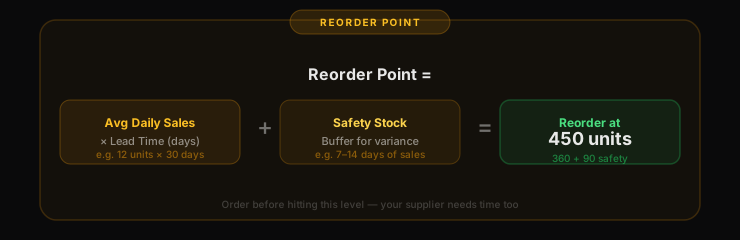
The fix is a reorder point: a minimum inventory level that triggers a purchase order before you run out. Your reorder point should account for your lead time (how long your supplier takes), your average daily sales rate, and a safety buffer.
Dayla tracks your inventory levels in real time and alerts you when any SKU crosses your reorder threshold, before you go out of stock. You can set custom thresholds per SKU and see your projected days of stock remaining based on current sales velocity.
How to set reorder alerts in your store
Shopify has a basic low-stock alert, but it requires manual threshold-setting per variant and sends a single email with no follow-up. For serious inventory management, you need a system that: (1) tracks average daily sales velocity per SKU, not just absolute stock numbers; (2) factors in your supplier lead time; and (3) alerts you with enough runway to actually place and receive an order.
A SKU with 200 units sounds safe until you realise you're selling 25 per day and your supplier needs 14 days. That's only 8 days of stock left, and reordering today means you'll still face a 6-day gap. Set your alerts at 2× your lead time demand, not at your gut feeling.
Suis ton vrai profit avec Dayla
Arrête de piloter ton e-commerce à l'aveugle. Dayla connecte tes données et calcule ton profit net réel en temps réel.